San Mateo County Superior Court serves as the main trial court for San Mateo County, providing legal resolution for a variety of civil, criminal, family, probate, and traffic cases. As part of the Superior Court of California, San Mateo County, it operates within the statewide judicial system to ensure cases are handled fairly, efficiently, and in accordance with state law. Residents, attorneys, and legal professionals rely on the court for accurate case processing, hearings, and official documentation. Its divisions and departments are organized to address specialized case types while maintaining public services and procedural consistency across the county.
The court plays a vital role in the California judiciary by managing legal proceedings and maintaining accountability. Its civil division handles disputes like personal injury, contracts, and property matters, while the criminal division oversees misdemeanors and felonies. Family law and probate divisions manage custody, support, wills, and estates. Traffic and small claims courts handle minor infractions and low-value disputes. Governance is led by the presiding judge, supported by associate judges and commissioners. Public services include case filing, hearing attendance, and official record requests. A “Court Lookup” tool helps users find case information quickly, improving accessibility for everyone
What is San Mateo County Superior Court?
The San Mateo County Superior Court serves as the primary trial court for the county, handling a wide range of legal matters. It ensures that residents have access to justice through fair hearings and timely rulings. The court balances local needs with state judicial standards, providing consistent legal authority for civil, criminal, family, probate, and traffic cases across San Mateo County.
History and Establishment of the Court
Established in the mid-19th century, the San Mateo County Court grew alongside the county’s population and legal demands. Over the years, it expanded its services to cover all trial court needs, from civil disputes to criminal prosecutions. Today, it operates with modernized systems, including electronic filings and online records, ensuring efficiency and accessibility for the public.
- Formed shortly after California courts were organized in 1850.
- Originally handled basic civil and criminal cases; expanded over decades.
- Continues to modernize its processes, including electronic filing and digital records.
Jurisdiction and Legal Authority
The San Mateo trial court has full legal authority over cases arising within the county, providing residents with a local forum for resolving disputes. Its jurisdiction covers civil, criminal, family, probate, and traffic matters. By applying California law consistently, the court protects the rights of all parties and ensures the orderly resolution of legal issues.
- Civil cases such as contracts, property disputes, and personal injury.
- Criminal cases ranging from misdemeanors to felony charges.
- Family law matters, including custody, divorce, and child support.
- Probate and guardianship cases.
- Traffic and small claims disputes.
Relationship to the California Superior Court System
As part of California’s statewide system, the San Mateo County Superior Court functions within the broader framework of state judicial authority. Its decisions follow state statutes and can be appealed to higher courts. This connection ensures that local rulings are consistent with statewide legal standards while offering residents access to appellate review when needed.
- Compliance with California courts rules and procedures.
- Coordination with appellate courts for appeals and precedent.
- Alignment with state-funded programs like mediation and family law services.
Court Governance and Management
The court is led by a presiding judge and supported by court executive officers, ensuring smooth administration and fair case management. Departments are organized by case type to handle matters efficiently. Clerks, officers, and staff play a critical role in daily operations, providing professional support and maintaining public access to court services.
- Presiding Judge – Leads the court and manages judicial assignments.
- Court Executive Officer – Supervises administrative operations and staff.
- Departments and Divisions – Organized by case type, such as civil, criminal, family, probate, and traffic.
- Emphasis on efficiency and public service in all court processes.
How to Search San Mateo County Court Cases
Users can access San Mateo County Superior Court case information both online and in person with step‑by‑step guidance. This explains how to perform a case search San Mateo for civil, criminal, probate, or family matters and view court records efficiently. Detailed instructions help people find case status, dockets, filings, and more.
Official Site URL: https://sanmateo.courts.ca.gov/
Steps for Online Case Search
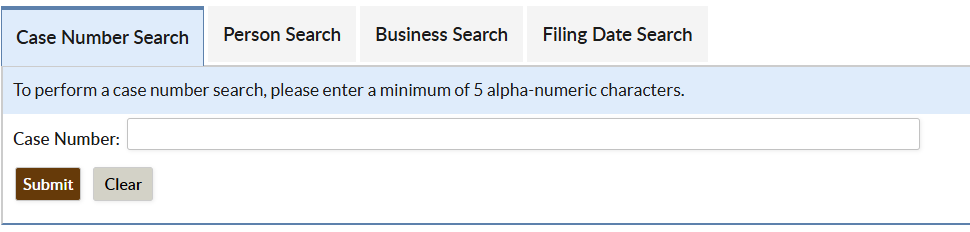
To search for cases online in San Mateo County, start by visiting the official court records portal. Enter the case number, party name, or other identifying details into the search fields. You can filter results by case type, date, or court department to narrow your search. Once located, view case details, upcoming hearing dates, and available documents. Some records may require additional permissions or fees to access.
- Open the Official Portal:
- Go to the San Mateo Superior Court’s online services page: https://sanmateo.courts.ca.gov/online-services/online-case-access
- Agree to Terms:
- Many public court portals show a disclaimer about use and data display. You may need to agree or accept terms before searching.
- Choose Search Type:
You can search by:- Case Number – Most accurate if you have it.
- Party Name – Enter first and last name.
- Filing Date Range – Useful if you know when the case was started.
- Enter Search Details:
- Input the party name, case number, or date range into the form.
- For names, enter at least the minimum characters required (e.g., 2 letters).
- Submit Search:
- Click the search or lookup button to retrieve results.
- Review the list of matches and click the correct record.
- View Case Summary:
- Basic info typically includes case number, parties, case type, filing date, and status.
- Document access may vary; some documents need in‑person or paid access.
Accessing Case Dockets & Filings
After locating the case:
- Click the case number or entry in the results list.
- Look for sections labeled docket, register of actions, or case history.
- Some portals show filed documents; others may list only event details.
Judicial Districts and Court Divisions
The San Mateo trial court is divided into judicial districts and specialized divisions to handle specific case types efficiently. This structure allows civil, criminal, family, probate, and traffic cases to be managed by judges and staff with expertise in each area. By organizing cases based on type and location, the court ensures timely hearings, consistent rulings, and accessible services for all county residents.
San Mateo County is divided into multiple judicial districts to manage cases locally while following the California Superior Court System. Each district serves particular regions of the county, providing residents with convenient filing locations and courtrooms. The system allows the court to balance case workloads across divisions, maintain efficiency, and deliver consistent legal outcomes for all types of cases filed in the county.
Civil Division
The Civil Division handles disputes between individuals, organizations, or businesses, covering issues such as contract disputes, personal injury claims, and property matters. Civil judges oversee filings, schedule hearings, and ensure cases progress according to California law. This division plays a key role in resolving non-criminal conflicts efficiently, maintaining fairness, and protecting the legal rights of all parties involved.
- Common Case Types: Contracts, personal injury, property disputes, business litigation
- Services Provided: Filing complaints, scheduling hearings, managing motions and trial dates
Criminal Division
The Criminal Division addresses violations of California criminal law, from misdemeanors to serious felonies. Judges supervise arraignments, pre-trial motions, trials, and sentencing. This division ensures that defendants’ rights are protected while holding offenders accountable, maintaining public safety, and supporting a transparent legal process. Experienced staff and court officers manage all proceedings efficiently.
- Common Case Types: Misdemeanors, felonies, sentencing, probation hearings
- Services Provided: Trial scheduling, plea hearings, jury management
Family Court
The Family Court manages matters such as divorce, child custody, and child support. Judges work to resolve disputes fairly, prioritizing the welfare of children and families. Mediators and family law facilitators often assist in reaching agreements before hearings, helping reduce the time and stress involved in litigation while ensuring compliance with California family law.
- Common Case Types: Divorce, custody, visitation, child support
- Services Provided: Mediation, hearings, enforcement of court orders
Probate Court
The Probate Court oversees cases involving wills, estates, and guardianships. Judges supervise the administration of estates, appointment of guardians for minors or incapacitated adults, and disputes over inheritance. This division ensures legal and financial matters are resolved correctly, providing oversight for complex family and estate issues while protecting the interests of vulnerable individuals.
- Common Case Types: Wills, estates, guardianship, conservatorship
- Services Provided: Estate administration, guardianship oversight, document approval
Traffic and Infractions
The Traffic Division of the San Mateo County Superior Court manages violations including speeding, DUI, and parking infractions. Judges and court staff oversee arraignments, hearings, and fine collection to ensure consistent enforcement of traffic laws. Residents have the opportunity to contest citations or resolve cases efficiently. This division handles common case types such as traffic tickets, DUI, and other moving violations, while providing services like arraignments, hearings, and payment processing to maintain an organized and accessible traffic court system.
Case Assignment to Divisions
Cases are assigned to divisions based on type, complexity, and jurisdiction. Court clerks review filings and direct each case to the appropriate division for processing. This system ensures specialized judges handle cases efficiently and accurately. Occasionally, a case may span multiple divisions if civil, criminal, or family matters intersect, requiring coordinated management across the court.
Court Governance and Administration
The Superior Court of California San Mateo County operates under a structured governance system to ensure fair and efficient administration of justice. Court governance involves leadership, administrative oversight, and staff coordination to manage daily operations and case flow. This structure ensures that judges, administrators, and court personnel work together to provide consistent, reliable, and accessible services for all residents of San Mateo County.
Structure of Court Governance
The court follows a hierarchical governance model that integrates judicial leadership with administrative management. This system enables organized case assignment, efficient handling of filings, and proper allocation of resources. Departments and divisions operate under clear lines of authority to maintain accountability, support court operations, and uphold the legal standards set by the California Judicial Council.
Role of the Presiding Judge
The presiding judge serves as the chief judicial officer of the court, responsible for overseeing case assignments and judicial functions. They provide leadership for policy decisions, manage courtroom schedules, and ensure judges adhere to state rules. The presiding judge also coordinates with administrative officers to align judicial priorities with operational needs, supporting smooth case management across all divisions.
- Oversees judicial assignments and case distribution
- Manages courtroom operations and schedules
- Implements policies in accordance with state law
Court Administration and Staff Responsibilities
Court administrators and staff play a critical role in the daily functioning of the court. In the middle of these operations, the Clerk of court helps manage official records, process legal filings, and coordinate administrative procedures that keep the judicial system running smoothly. Their responsibilities include managing filings, maintaining court records, supporting judges in hearings, and assisting the public. Clerks, officers, and administrative staff work collectively to facilitate hearings, manage dockets, and ensure all procedures comply with legal standards and county requirements.
- Court Administrators: Oversee day-to-day operations and staffing
- Clerks and Officers: Manage records, assist in hearings, and support judges
- Support Staff: Handle scheduling, filings, and public inquiries
Oversight by the California Judicial Council
The California Judicial Council provides statewide oversight of all superior courts, including San Mateo County, by establishing policies, rules, and operational guidelines. It monitors court performance, ensures efficient operations, and approves budgets to support consistent and effective judicial services. By maintaining transparency and enforcing state-mandated standards, the council promotes fairness, accountability, and public trust. Its work ensures that local courts operate smoothly while adhering to uniform procedures and policies across California’s judicial system.
Filing and Case Procedures
The San Mateo County Superior Court provides clear procedures for filing legal cases across civil, criminal, probate, and family divisions. Proper filing ensures cases are processed efficiently and reach the correct court division. Residents and attorneys must follow the court’s established guidelines for submitting documents, paying fees, and managing filings to maintain accuracy and compliance with legal requirements.
How to File Cases
Filing a case begins with determining the correct division based on case type. Civil cases go to the Civil Division, criminal matters to the Criminal Division, family law to Family Court, and probate matters to Probate Court. Proper categorization ensures that judges and staff with the relevant expertise manage each case promptly. Filing can be completed either electronically or in person.
- Civil Division: Contracts, personal injury, property disputes
- Criminal Division: Misdemeanors, felonies, citations
- Family Court: Custody, divorce, child support
- Probate Court: Wills, estates, guardianships
Filing Procedures
- Prepare Documents: Complete required forms specific to your case type.
- Review Requirements: Check filing fees, signatures, and attachments.
- Submit Filing: Choose e-filing or in-person submission at the courthouse.
- Receive Confirmation: Ensure your filing is accepted and obtain a receipt.
- Case Assignment: The court assigns your filing to the appropriate judge and division.
- Check instructions carefully to avoid delays
- Include all supporting documents requested
Electronic Filing vs. In-Person Filing
The court supports e-filing for most civil and probate cases, allowing submissions online via the court’s case management system. E-filing is faster, provides immediate confirmation, and reduces trips to the courthouse. In-person filing is still available for those who prefer to submit documents physically, especially for family or criminal matters that may require direct interaction with staff.
- E-Filing: Online submission, instant confirmation, document tracking
- In-Person Filing: Lobby submission, clerk assistance, fee payment
Filing Fee Schedule
San Mateo County Superior Court charges filing fees that vary by case type and document. Fees cover civil, family, probate, small claims, and motion filings, as well as e-filing service charges. Some cases may qualify for fee waivers if requested. Understanding these fees before filing helps litigants prepare financially, ensures accurate submissions, and avoids delays in processing. Local variations or surcharges may also apply depending on the specific court department.
| Case Type / Fee Item | Fee Amount (Approx.) |
|---|---|
| Civil – Unlimited Complaint (over $25,000) | $435 |
| Civil – Limited Case (up to $10,000) | $225 |
| Civil – Limited Case ($10,000–$25,000) | $370 |
| Family Law – Petition (Dissolution / Custody) | $435 |
| Probate – Petition for Estate Administration | $435 |
| Small Claims – Plaintiff Filing* | (Varies locally, typically lower) |
| Answer or Response (Civil) | $435 |
| Motion Filing Fees | Typically $60–$80 |
| E‑filing Service Fee | Varies by Provider |
| Fee Waiver Petition | Free (if granted) |
Filing Timeline
The time required to process filings in San Mateo County Superior Court depends on case type, submission method, and court workload. E-filed documents are often acknowledged the same day, while in-person filings may take several business days. Specialized cases like probate, family law, or small claims follow distinct schedules. Being aware of typical processing times helps parties plan hearings, responses, and document submissions efficiently, ensuring timely participation in court proceedings.
| Action | Typical Timeframe |
|---|---|
| Civil / Family / Probate Filing Acknowledgement | Same court day (if e‑filed before cutoff) |
| In‑Person Filing Processing | 1–3 business days |
| Fee Waiver Review | Varies (typically days to weeks) |
| Small Claims Hearing Scheduling | ~3–8 weeks |
| Probate / Family Law First Hearing | 6–12 weeks |
| Civil Case Setting Conference | 4–8 weeks |
Location and Contact Information
The San Mateo County Superior Court operates multiple courthouses to serve residents across the county with accessible locations and full contact details. These locations handle civil, criminal, family, probate, juvenile, and traffic matters, and provide public access to services such as records, filings, and jury information. Accurate addresses, phone numbers, and visitor resources help users find the right courthouse for their legal needs quickly.
Main Courthouse and Branch Addresses
This is the primary Superior Court of California San Mateo County location handling civil, family, probate, small claims, criminal, and record services.
Southern Branch – Hall of Justice and Records
400 County Center, Redwood City, CA 94063
Northern Branch
1050 Mission Road, South San Francisco, CA 94080
Handles criminal, traffic, and selected family law matters for North County residents.
Central Branch
800 North Humboldt Street, San Mateo, CA 94401
Open for public access and certain hearings; not all counters are staffed here.
Juvenile Branch
222 Paul Scannell Drive, San Mateo, CA 94402
Handles juvenile delinquency, dependency, and related proceedings.
General Court Information: (650) 261‑5100
Official website (naked URL): https://sanmateo.courts.ca.gov/
Court Hours of Operation and Holiday Schedules
Southern Branch (Redwood City):
- Civil, Family, Probate & Small Claims: Mon–Fri 8:30 a.m.–1:00 p.m.
- Criminal: Mon–Fri 8:00 a.m.–4:00 p.m.
- Records Management Counter: Mon–Fri 8:30 a.m.–1:00 p.m.
- Jury & Admin Offices: Mon–Fri 8:00 a.m.–5:00 p.m.
Northern Branch (South San Francisco): Criminal & Traffic: Mon–Fri 8:00 a.m.–4:00 p.m.
Central Branch (San Mateo): Open to public Mon–Fri 8:00 a.m.–5:00 p.m. (no clerk counter)
Juvenile Branch: Clerk’s Office: Mon–Fri 8:00 a.m.–4:00 p.m.
Contact Information for Court Services
- Main Court Information: (650) 261‑5100
- Civil Division: (650) 261‑5100
- Criminal Division: (650) 261‑5100 option 1
- Family Law Clerk: (650) 261‑5100
- Probate Division: (650) 261‑5100
- Records Management: (650) 261‑5100
- Traffic Division (Northern Branch): Mon–Fri 8:00 a.m.–4:00 p.m.
- Juror Services: (650) 599‑1700
Directions for Visitors
Driving Directions:
- From Highway 101 South/North, take the Whipple Avenue or Peninsula Avenue exit and follow local roads to 400 County Center in Redwood City for the main courthouse.
- To reach the Northern Branch, take Grand Avenue from Highway 101 and follow signs to Mission Road.
Public Transport & parking:
- Many local buses and Caltrain serve San Mateo and Redwood City; use transit planners like 511.org to plan a trip to courthouses.
- Parking: Metered street parking and nearby lots serve the Redwood City Hall of Justice; additional lots are near South San Francisco and San Mateo branches.
- Accessibility: ADA accommodations are available for individuals with disabilities. The court provides accessible entry, seating, and assistive services upon request. Contact the court in advance to arrange accommodations.
- Facilities: Public counters, self‑help resources, and information terminals are available at main courthouses; staff can assist with general inquiries.
Frequently Asked Questions
Get clear answers to frequently asked questions about San Mateo County Superior Court that are related about court information, case status, records, fees, timeline and more. These FAQs help you understand, find the right steps and official procedures for your needs. Each answer gives practical details you can use right away to access services or plan your next action at the courthouse.
How can I access San Mateo court records online?
You can view many court records through the official San Mateo County Superior Court website at https://sanmateo.courts.ca.gov. Use the court’s case search system to enter a case number, party name, or type of case. This online portal shows case status, docket entries, hearing dates, and public filings. Some documents may be restricted and require in‑person review or authorization. Always follow the site’s terms of use and check that your search details are correct to get accurate results before requesting copies.
Are there fees for obtaining documents from the court?
Yes. The court charges fees for copies of documents, certified copies, and some services. Civil cases, family law petitions, and probate filings each have set fees posted on the court’s fee schedule. E‑filing vendors may also add service charges. Fee waivers are available if you meet income guidelines by submitting the proper paperwork. Before you request copies, check the most recent fee list on the court’s official site so you know the cost. When you pay, you will receive a receipt and estimated delivery timeline.
How long does it take to process a records request?
Processing times vary by request method. Online requests made through the court’s portal can be processed the same day or within one business day if submitted early. Requests made in person at the clerk’s counter are usually completed within 1–3 business days, depending on workload and staff availability. Mail requests may take longer. Larger document sets or certified copies can add time. You can always ask the clerk for an estimated timeline and tracking information so you know when your records will be ready.
Can I access sealed or confidential cases?
No. Sealed or confidential cases are not accessible to the general public. These protections exist to safeguard privacy and comply with California law. Parties in the case, their attorneys of record, or those with a valid court order may request access. To seek permission, you must file a motion or application explaining why access is needed. The judge reviews the request and issues an order if appropriate. Without authorization, sealed files remain inaccessible in both online portals and in‑person records systems.
Where do I find property or civil case records in San Mateo?
You can find property and civil case records by using the San Mateo court’s online case search tool or by visiting the main courthouse at 400 County Center, Redwood City, CA 94063. Enter the civil case number, party name, or filing date into the search system online for quick results. For copies or certified documents, go to the Records Management counter or clerk’s office. The court may provide printed copies or electronic versions for a fee. Always verify your search criteria for accurate results.
How do I check my case status and upcoming hearings?
To check your case status and upcoming hearing dates, use the court’s online case search at https://sanmateo.courts.ca.gov and enter your case number or party name. The system displays the docket, recent filings, scheduled court dates, and current status. If you cannot find information online, visit the clerk’s counter or call the appropriate division for help. Make sure you have the correct case number and spelling for names to avoid missing details. Hearing calendars may update frequently, so check often for changes.