
San Mateo County Court Calendar provides a detailed schedule of court proceedings, helping litigants, attorneys, and the public plan their visits efficiently. The calendar lists hearings, courtroom assignments, and department schedules, making it easier to manage time for each case. By checking the court appearance schedule regularly, users can avoid missed hearings or delays. This resource also provides access to tentative rulings, allowing participants to see preliminary outcomes before attending the hearing. With multiple calendar types available, including hearing, department, and courtroom schedules, the court ensures transparency and smooth coordination for all involved parties.
Using the San Mateo Court schedule allows participants to stay organized and confirm important details such as hearing types, case numbers, and courtroom locations. A quick court date lookup can provide essential information, helping litigants prepare for their appointments and plan for any necessary legal steps. The calendars are updated frequently to reflect rescheduled or postponed hearings, ensuring accuracy. Attorneys, witnesses, and family members benefit from this system, which improves communication and reduces confusion. Overall, the court calendar is an essential tool for anyone participating in or monitoring cases in San Mateo County.
What is the Court Calendar?
The San Mateo hearing calendar is an organized schedule of court proceedings that informs litigants, attorneys, and the public about upcoming hearings. In the middle of this process, the San Mateo County Court maintains the official scheduling system that lists important case events and court sessions. It provides essential details about court appearance dates, helping participants plan effectively and prepare all necessary documents. Court calendars also include courtroom assignments and tentative rulings, which give insight into preliminary decisions. Regularly reviewing the calendar ensures timely attendance, prevents delays, and helps users stay updated on changes such as rescheduled hearings, emergency sessions, or court closures. The system promotes transparency and supports smooth legal proceedings.
Types of Court Calendars
Courts maintain different calendars to serve multiple needs:
- Daily Calendar: Lists all hearings scheduled for a specific day, including civil, family, traffic, and criminal cases. Users can see the exact time and courtroom for each hearing, making planning easier.
- Tentative Rulings: Provides preliminary decisions on motions before hearings. Parties can review these rulings to adjust arguments or prepare for court discussions. Tentative rulings give insight into potential outcomes and are updated regularly.
- Department Calendar: Shows the full schedule for each courtroom or department, including which cases are assigned to which judges. It helps attorneys and court staff manage workloads efficiently and ensures smooth operations.
How the Court Calendar Helps Users
The San Mateo hearing calendar allows attorneys, litigants, and the public to stay organized and track progress across multiple cases. It ensures that participants know court appearance dates in advance and can adjust schedules or coordinate witnesses. The calendar also informs parties of tentative rulings, which may affect decisions or settlement discussions before a hearing. By consulting the calendar regularly, users reduce the risk of missed hearings, avoid unnecessary delays, and maintain effective communication with the court.
Planning Court Appearances Effectively
Understanding the courtroom timetable helps users manage time and reduce stress when attending court. By checking the daily and department schedules, participants know exactly when and where their hearings are held. Attorneys can plan for case preparation, while witnesses and parties can adjust personal schedules. Following tentative rulings ahead of time gives a sense of expected outcomes and allows users to prepare arguments or documentation accordingly. Staying informed ensures smooth participation and prevents last-minute confusion.
How to Access the San Mateo County Court Calendar
The San Mateo County Court Calendar provides official schedules for hearings, courtroom assignments, and tentative rulings. The court allows participants to perform a hearing date lookup through its online Records Index (MIDX) system. This index covers appeals, civil, criminal, family law, probate, and small claims cases. Accessing the calendar ensures timely attendance, helps plan court appearance dates, and keeps parties informed of any changes. Below is a steps to using the URL effectively.
Visit the Official MIDX Website
- Go to the official San Mateo County Superior Court website: https://www.sanmateo.courts.ca.gov
- Click “Records Index” or navigate directly to the MIDX portal: https://apps.sanmateo.courts.ca.gov/midx
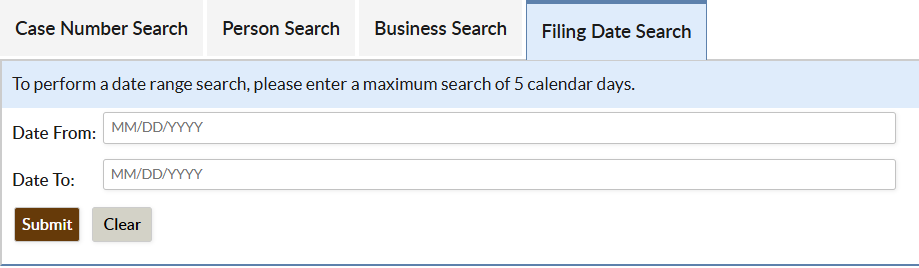
- The portal displays tabs for Case Number Search, Person Search, Business Search, and Filing Date Search.
Searching by Case Number
- Click the Case Number Search tab.
- Enter your case number exactly as it appears on your documents.
- Click Submit.
- The system returns the hearing date, courtroom assignment, department, and any tentative rulings.
Searching by Person
- Select the Person Search tab.
- Enter the first and last name of a party involved in the case.
- Optionally, add middle name or initials to narrow results.
- Click Submit to see a list of cases with court appearance dates, hearing times, and departments.
Searching by Business
- Open the Business Search tab.
- Enter the full legal name of the business or entity involved in the case.
- Click Submit to retrieve cases associated with that business, including hearing schedules and tentative rulings.
Searching by Filing Date
- Choose the Filing Date Search tab.
- Enter a Date From and Date To (maximum range of 5 calendar days).
- Click Submit.
- The portal will show all cases filed in that date range, along with department calendars, courtroom assignments, and tentative rulings if available.
Tentative Rulings and Court Decisions
Tentative rulings are preliminary decisions issued by a judge before a scheduled hearing, and they often appear directly on the courtroom schedule for that day. These rulings give parties early insight into how the court may decide a motion or request. They are commonly posted alongside the daily calendar, allowing attorneys and litigants to review possible outcomes before appearing in court. This process promotes efficiency and helps reduce unnecessary arguments during hearings.
How Tentative Rulings Appear on the Calendar
Tentative rulings are usually listed under the same department handling the case. They may appear as a separate link titled “Tentative Rulings” or be included within the daily courtroom schedule. Courts generally publish them in a consistent format so attorneys and litigants can quickly locate their matter. Courts often release these rulings at a set time, typically the afternoon before the hearing, giving parties time to prepare. If no party contests the tentative decision within the required timeframe, it may automatically become the final order of the court.
You can typically identify a tentative ruling entry by the following details:
- Case Number – Confirms you are reviewing the correct case.
- Party Names – Lists the involved parties for quick identification.
- Hearing Date – Specifies the scheduled date of the proceeding.
- Department or Courtroom – Indicates which judge or department issued the ruling.
- Judge’s Preliminary Decision – Summarizes the court’s intended ruling before the hearing.
How to Confirm a Final Court Decision
A tentative ruling does not always become final automatically. If no party contests it within the allowed timeframe, the court may adopt it as the final order. If a party challenges the ruling, the judge may hear arguments during the scheduled hearing and then issue a final decision. After the hearing, the updated minute order or case docket reflects the official ruling. Checking the online calendar again helps confirm the final outcome.
Track Hearing Updates
Attorneys and litigants should monitor hearing updates regularly to stay informed about changes. Using the correct case number and department improves search accuracy. Tracking the court outcome schedule helps identify continuances, revised preliminary decisions, or courtroom reassignments. Reviewing tentative rulings the day before a hearing supports stronger preparation and clearer case strategy. Consistent calendar checks reduce missed details and improve overall case management.
Department-Specific Calendars
A department calendar lists hearings assigned to a specific courtroom and judge within the court. Each division maintains its own courtroom schedule, helping attorneys and litigants confirm dates, times, and judicial assignments. Reviewing the correct department-specific schedule ensures accurate attendance and preparation. Since posting formats may vary by case type, users should always verify details through the appropriate department listing. Regular calendar checks reduce confusion, prevent missed appearances, and support organized case management across all divisions.
- Department Calendar Search: Select the correct department before reviewing hearing dates.
- Case Hearing Tracker: Enter the case number to confirm assigned courtroom and time.
- Courtroom Schedule Review: Check the listing one day before the hearing for updates or continuances.
- Online and In-Person Verification: Confirm details through the website or clerk’s office if needed.
Civil Department Calendar
Civil departments handle disputes involving contracts, property, personal injury, and other non-criminal matters. Civil hearings such as motions, case management conferences, and trials appear on the department calendar through the online case index system. The posted courtroom timetable usually includes the hearing time, case number, parties involved, and assigned judge. Tentative rulings may appear on a separate page connected to the same department. Most civil calendars are available online, providing reliable and timely schedule updates for case participants.
- Motion Hearings: Listed with time, department number, and judge assignment.
- Case Management Conferences: Displayed with scheduling status and courtroom location.
- Trial Dates: Posted with courtroom assignment and expected duration if available.
- Tentative Rulings Link: Often published separately under the same department page.
Criminal Department Calendar
Criminal departments manage arraignments, pretrial hearings, plea entries, and sentencing proceedings. The courtroom schedule for criminal cases may appear online, though some details require confirmation at the courthouse. Privacy rules may limit full online visibility of certain information. Users often verify hearing dates through both the online department calendar and clerk assistance. Monitoring the department calendar closely helps track custody hearings, readiness conferences, and updated courtroom assignments.
- Arraignment Listings: Include case number, department, and scheduled time.
- Pretrial Hearings: Shown with courtroom location and judge assignment.
- Sentencing Dates: Posted with confirmed department and session time.
- Clerk Confirmation: Available in person for additional case details.
Family Law Department Calendar
Family law departments post hearings involving divorce, custody, visitation, support, and protective orders. These hearings appear on the department-specific schedule through the court’s online portal. Family law tentative rulings are often published before the hearing date and linked to the same department page. Reviewing the case hearing tracker frequently helps parties identify continuances, updated orders, or courtroom changes. Most listings are available online, offering consistent scheduling information for involved parties.
- Custody Hearings: Listed with time, department, and assigned judge.
- Support Motions: Display hearing dates and courtroom assignments.
- Restraining Order Matters: Posted with same-day or short-notice schedules.
- Tentative Rulings Page: Linked directly to the family law department listing.
Probate Department Calendar
Probate departments oversee estate administration, guardianships, and conservatorships. In the middle of these responsibilities, the Probate court manages proceedings related to wills, estates, and the protection of individuals who cannot manage their affairs. Their department calendar lists hearing times, courtroom numbers, case numbers, and judicial officers. Probate tentative rulings may appear separately but remain connected to the department’s schedule. Online postings are common, though complex estate cases may require direct clerk confirmation. Reviewing the courtroom timetable before attending helps verify location, scheduled time, and any updates that may affect the hearing.
- Estate Hearings: Include department number and assigned judge.
- Guardianship Proceedings: Posted with scheduled review dates.
- Conservatorship Matters: Listed with courtroom and time details.
- Clerk Assistance: Available for confirmation of filing or hearing updates.
How Hearing Dates Are Assigned
The San Mateo County Court Calendar reflects how each case moves from filing to a scheduled court date. A structured court appearance schedule begins once documents are submitted and accepted by the clerk. From that point, hearing allocation follows internal court procedures that consider department assignment, court docket placement, and judicial availability. This process ensures that every matter appears accurately on the official calendar and that scheduling priority is applied when necessary.
Filing Triggers Case Scheduling
When a complaint, petition, or motion is filed, the court system records it and begins the scheduling process. The filing officially places the matter into the queue for court docket placement. Required notice periods and statutory timelines affect how soon a hearing can be set. Once reviewed and accepted, the clerk enters the case into the system so it can appear on the San Mateo County Court Calendar.
- Filing Review Process: Clerk verifies required documents and filing fees.
- Case Entry: Matter is entered into the court’s case management system.
- Docket Placement: Case is added to the queue for hearing allocation.
- Notice Requirements: Statutory timelines influence available hearing dates.
Clerk Assigns Department
After acceptance, the clerk assigns the case to the appropriate division based on its type. Civil, criminal, family, and probate cases follow department-specific routing procedures. This assignment determines where the case will appear within the San Mateo County Court Calendar. Workload balance and subject matter jurisdiction influence this step, ensuring cases are distributed fairly across available courtrooms.
- Department Routing: Case directed to the correct division.
- Workload Distribution: Even distribution across departments.
- Calendar Entry: Hearing request placed into department calendar system.
Judicial Availability Determines the Date
Once assigned, the hearing date depends largely on judicial availability. Judges manage full calendars, and open time slots determine placement within the court appearance schedule. The system reviews current bookings and assigns the next qualifying date that satisfies notice rules. High-volume departments may schedule hearings further out, especially during busy court terms.
- Calendar Review: Judge’s open dates identified.
- Time Slot Assignment: Hearing placed in next qualifying slot.
- Confirmation Posting: Date added to official courtroom schedule.
Emergency handling Receive Scheduling Priority
Certain filings qualify for urgent handling and receive scheduling priority. Emergency protective orders, urgent custody disputes, and time-sensitive criminal proceedings may move ahead of standard matters. Court staff adjust hearing allocation to reflect the urgency and update the San Mateo County Court Calendar accordingly. These accelerated placements help address immediate legal concerns without unnecessary delay.
- Emergency Filing Review: Court evaluates urgency level.
- Priority Placement: Case moved ahead of standard matters.
- Accelerated Hearing Date: Early courtroom schedule assignment.
Location & Accessibility Information
The San Mateo County Court Calendar helps users confirm their hearing venue before arriving at the courthouse. Knowing the correct courthouse location ensures timely arrival and smooth participation in scheduled proceedings. San Mateo County Superior Court operates multiple court facilities, and each case is assigned to a specific hearing venue listed on the official calendar. Checking the calendar before travel helps confirm the correct court building access point and assigned department.
Main Courthouse Locations
Each courthouse location handles specific case types. The assigned address for your hearing appears on the San Mateo County Court Calendar under your case listing. Always confirm the department number and courtroom before attending. San Mateo County Superior Court serves the public through several courthouse locations:
Hall of Justice and Records
400 County Center
Redwood City, CA 94063
Southern Branch
400 County Center
Redwood City, CA 94063
Northern Branch
1050 Mission Road
South San Francisco, CA 94080
Directions and Parking
The Hall of Justice in Redwood City is located near Highway 101 and El Camino Real. Public parking garages are available within walking distance of the court building. Metered street parking may also be available, though time limits apply. Arriving early allows extra time for parking, security screening, and locating the assigned courtroom. Public transportation options include Caltrain, SamTrans buses, and local transit services. Redwood City Caltrain Station is within walking distance of the courthouse. Users attending the Northern Branch in South San Francisco can access nearby bus routes and commuter rail options. Checking transit schedules in advance supports timely arrival at the hearing venue.
Accessibility Features
All court building access points comply with accessibility standards. Features include wheelchair-accessible entrances, elevators, accessible restrooms, and designated parking spaces. Assistive listening devices may be available in certain courtrooms upon request. Individuals requiring language interpretation or accommodation should contact the clerk’s office before their hearing date. Early communication helps ensure proper arrangements are made.
Onsite vs Online Calendar Access
The San Mateo County Court Calendar is available online through the court’s official website, allowing users to confirm hearing dates before traveling. Public access terminals are also available inside courthouse locations for onsite calendar review. Users can check daily schedules, department calendars, and tentative rulings either online or in person. Verifying details through the online court calendar before leaving home reduces confusion and supports accurate court building access on the day of the hearing.
Frequently Asked Questions
The San Mateo County Court Calendar provides updated schedules for hearings, department assignments, and tentative rulings. It helps attorneys, litigants, and the public confirm court dates through a reliable hearing date lookup system. By reviewing the online calendar regularly, users can track case progress and avoid missed appearances. Below are common questions about using the calendar effectively in San Mateo County.
How do I find my hearing date?
To find your hearing date, visit the official San Mateo County Court Calendar page on the website of San Mateo County Superior Court. Use the hearing date lookup feature by entering your case number, party name, or department. The system will display your scheduled date, time, courtroom number, and assigned judge. Always double-check the listing one day before your appearance to confirm no changes were made. If you cannot locate your case online, contact the clerk’s office for assistance with court docket inquiries and confirmation of your scheduled hearing.
Can I view tentative rulings online?
Yes, many departments publish tentative rulings through the online calendar system. These preliminary decisions are often posted the afternoon before the scheduled hearing. You can review them by selecting your department and case number on the San Mateo County Court Calendar. Tentative rulings explain how the judge intends to rule on motions unless a party requests oral argument. Checking these postings helps attorneys and self-represented litigants prepare responses and understand potential outcomes before appearing in court.
How often is the court calendar updated?
The San Mateo County Court Calendar is typically updated daily. Changes may include newly scheduled hearings, courtroom reassignments, or continuances. Departments update their courtroom listings as soon as new information becomes available. For accurate public hearings lookup, users should review the calendar both when the hearing is scheduled and again shortly before the court date. Frequent updates ensure that the case schedule guide reflects current judicial availability and department adjustments.
What happens if my case is rescheduled?
If your case is rescheduled, the updated date will appear on the San Mateo County Court Calendar. You may receive notice by mail or electronic notification, depending on your case type. Even after receiving notice, verify the new listing through the online hearing date lookup system. Rescheduled matters may involve a new courtroom or department assignment. Monitoring the calendar prevents confusion and ensures that you arrive at the correct hearing venue.
Are department-specific calendars available?
Yes, each division posts its own department calendar. Civil, criminal, family, and probate matters are listed under their assigned courtroom schedules. You can filter by department when using the San Mateo County Court Calendar to narrow your search results. This department-based system acts as a case schedule guide, helping users confirm judicial assignments and hearing times quickly. Reviewing the correct department ensures accurate tracking of your specific case.
Is there a way to track multiple cases?
Yes, the online portal allows repeated searches for different case numbers or party names. This feature supports attorneys or users managing several matters at once. By conducting separate hearing date lookup searches, you can monitor multiple listings in one session. Keeping a record of case numbers improves efficiency during court docket inquiries. Regular review of each listing ensures you stay informed about updates, tentative rulings, and scheduled appearances.